Grabbing a fruit from the Dining Commons after every meal eventually resulted in an amassed pile of fruits on my dorm table. Not knowing what do to with them, I simply decided to arrange them so that they would look nice. But before I even started, I noticed the effect of gestalt at work.
Photo take by Diane Wu
The arrangement of the two apples with the banana created a face! As Scott McCloud, author of Understanding Comics would say, “We humans are a self-centered race. We see ourselves in everything” (32, 33). Fruits have no relations to humans, and yet, I was able to see a face and project my emotions onto the fruits; the fruit looks very happy! Through such a simple placement of fruit in a way that looks like part of the face, we are able to use gestalt and assign a personality to the fruit and create many other assumptions about it.
Gestalt can be applied to countless designs found all over the world, one of which is in London titled Swim. It is a sculpture of a giant man swimming in a large field of grass. Although passersby only see the exposed left foot, the right shoulder, and arms of the swimmer, people immediately assume that the rest of the missing body parts are hidden under the grass. However, that is not the case since the commissioners did not even manufacture the rest of the body. This immediate assumption is due to gestalt; people tend to see everything as a “unified whole” when they are only given parts of a whole. This is an interesting concept designers must keep in mind. Oftentimes, what we don’t see requires the use of our imagination to fill in the empty gaps; the imagination portion of the design may be even more important and interesting than the actual object displayed for viewers to see.
The most conspicuous object in my room is undeniably the giant, bright yellow mug that sits next to my computer. I see it every day, drink from it every day, and set it aside whenever it is not in use. I saw it as a functional mug and not an object that was industrially designed, until now.
Photo by Diane Wu
This mass-produced object of industrial design is monochromatic with different intensity in the color of yellow. The rhythmic pattern of circular yellow dots that encircles the mug and the handle conveys a sense of repetition. The dot patterns also slightly use gradation with the smaller circles at the bottom of the mug, and larger circles closer to the rim of the mug. Each dot conveys a theme of nature that includes the sun, which explains the incorporation of the dominant yellow color. The suns are depicted in a rather cartoon-like image with wavy lines representing the rays emanating from the sun, conveying a sense of movement. Each sun has an individualized face that displays a particular emotion such as sadness, happiness, or uncertainty. These faces, however, are very simply drawn, so it allows us to project ourselves into the image of the sun, making the mug more personable and relatable. Through the rhythmic repetition from the circles, the mug was able to bring unity with the variety of sun images. Although the mug has a formal balance due to its symmetry in form, the designs on the mug has an informal visual balance due to the differences in the images in each circle. The form of the mug, similar to an upside-down cone where the rim is wider than its base, determines the function and content of this mug. The size of the mug, its form, convinced me to bring it to college because it influences how much water I can pour into the mug, which is its content.
It is remarkable to note that humans are able to make so much judgments and analysis from a single insignificant object.
The documentary Objectified introduced us to the world of industrial design, which is a branch of the design industry most people often overlook. Industrial design focuses on redesigning the shapes of everyday object people use to make our daily lives easier and more convenient without even realizing it. As a result, Objectified showed that the form of the objects we use everyday affects the content of our happiness and convenience.
The redesigning of the hedge trimmer handles sets a perfect example for how the form and shape of the gardening tool can affect the content of our gardening experience. Simply adjusting the form by adding curves and a bulb to the tip of the straight handle allows people to have a better grip without putting more energy or effort into their trimming work. Although this may seem like a small feat, it could mean the difference between whether or not the gardener will have a strained and sore arm when he wakes up the next morning, thus, affecting the worker’s overall gardening experience. It is all these little unnoticed things in life that can add up and define our day.
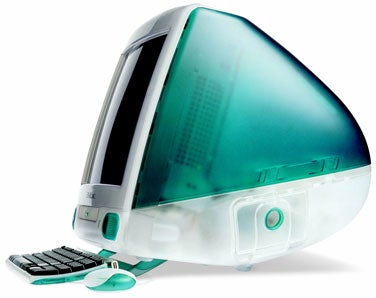
The Apple Company was one of the earliest companies to realize that the designs encasing their products may sometimes be even more important than the function of the product themselves. As a result, they hired the genius designer Jonathan Ives, whom basically launched the Apple Company to success from his designs. Computers before the late 1990s were all box-like, chunky, and neutral-colored, so Jonathan Ive probably thought to himself, “What would make the computer experience more enjoyable and aesthetically pleasing?” They came up with the iMac, which gave the apple computers clear, bright casings that stood out from the rest of the computers during that time. By simply adjusting and redesigning the form and color of the computer, the content of the user’s experience is dramatically more enjoyable and uplifting; computers brought not only function, but also pleasure to their users. As a natural instinct, people often gravitate towards designs and objects that are aesthetically pleasing.Therefore, the Apple Company justified the fact that the design behind their technology is just as important as the technology itself.
From the time of the Renaissance up until the invention of photography, the goals of many painters were to paint images that looked real and life-like. However, after the invention of photography, many artists became disillusioned in painting life-like images because what takes them days or even weeks to paint, will simply take a few hours for a picture to develop.
http://www.mrdowling.com/images/704mosalisa.jpg
http://library.thinkquest.org/27927/Centur4.jpg
Eventually, a wave of art movement called Impressionism appeared in Europe from 1867 to 1886 to counteract the invention of photography and its ability to create exact replicas of the world around us. Impressionist painters’ works basically look like actual paintings rather than replicas of the real world by bringing unmixed colors straight onto the canvas. Impressionists paint with small series of strokes in order to create an overall effect when viewed from far away. From close-up, the painting seems like a messy mixture of random colors; however, each step back the viewer takes creates a different experience, and eventually, once the viewer is standing far enough, the human eye will automatically mix those individual colored strokes together and a recognizable overall picture magically appears.
A century later, the desire to create realistic images with paint on canvas appeared once more. This new movement, photorealism, actually worked with the technology of photography by painting from photos. Photorealism artworks are actual paintings that resemble pictures taken from a camera. The lighting, color, and texture of the items or people depicted in the painting are so accurate that it often requires people to give a double-take before realizing the artwork is in fact a painting and not a photograph.
Impressionism and photorealism relate in that they both focus on being innovative and different from the dominant art movement before their time. They are not afraid to think differently from prior art styles and create their own movements in the art world. Both styles also have a strong focus on texture. Although both styles of paintings are directly affected by the invention of photography, the end results of the artworks are at opposite ends of the spectrum; impressionism revolves around painting sceneries and events with the idea of abstract colors and painterly strokes, while photorealism focuses more on the minute details of specific objects or people.
Design is not solely based upon the aesthetics; it can often be used as a method of communication to convey the artist’s belief and ideas about a certain issue to the public. As a result, it would require its audience to understand the designer’s intentions so that they may respond to it; this is exactly what a conversation is: a method of communication in which both the designer and the viewer interact together. It is the most important step as a designer, being able to communicate the idea to a broad range of audience, because design is often a collaborative work. In order to work together, people must understand the purpose or goal for which they are working towards.
Interactive art is a style of art that allows art to speak out to the public and have its viewers participate in response. Rather than “tell” the audience what they should do or believe, interactive art allows the public to join in on the idea and participate right along with it.
An example is the Composting Contraption created for the ScrapEden project in San Francisco, whose main goal is to educate everyone about the joys of composting. The Composting Contraption is basically a manually-powered machine that uses the science of kinetic energy to turn the barrel for a composting bin. The materials used to make this machine were either recycled or reused, which is a wonderful way to stay green and help reduce the trash in our environment. This mobile compost design will travel through the area, educating children and adults alike, to enlighten them about composting methods and ways to recycle. They hope to maintain San Francisco’s zero waste goals.
Sources:
ScrapEden SF 2010 — Black Rock Arts Foundation." — Black Rock Arts Foundation. Web. 16 Oct. 2010. .
Even when confined inside a building, one can still find creativity from the limited surrounding. I feel that I often find my creativity by being spontaneous. I take whatever I find in front of me, think of what I can do with it, and begin working towards the first idea that appears in my head.
Photo by Diane Wu
As represented by the photo, I created six cubes from scotch tape, and began arranging them in certain patterns. It wasn’t until I placed them inside a clear rectangular container and shook the cubes into different arrangements that I remembered Kostas Terzidis’ article on The Etymology of Design: Pro-Socratic Perspective. He states that “design is about the derivative of something that suggests the presence or existence of a fact,” meaning designers never create something new because it already existed before, the same way a fact will always exist. Designers simply arrange and rearrange certain things so that it may appear different or innovative. However, it had already existed before. We simply rediscovered it once more.
My six cubes in a clear plastic container replicated this idea by showing that no matter how much we shake the container and rearrange the cubes into different patterns, these patterns are not newly created by the designer. These limited arrangements have already been discovered before, but human memory can only live so long. When the new idea is forgotten, it will be rediscovered in the future as something “new”, and the cycle continues into the future. No matter how creative or original a designer may seem, a design similar to theirs have probably been already used in the past, but in such a small scale that the original idea of the past designer was soon forgotten.
Photo by Diane Wu
Photo by Diane Wu
Sources:
Terzidis, Kostas. "The Etymology of Design: Pro-Socratic Perspective." MIT Press Journals. 5 Oct. 2007. Web. 20 Sept. 2010. <http://ucelinks.cdlib.org:8888/sfx_local?sid=mit&genre=article&id=doi:10.1162/desi.2007.23.4.69>.
It is October, and I can already see the leaves on the trees changing colors from green to yellow, orange, and red. The warm breeze of the wind animates the trees and brings them to life, lifting the already-fallen leaves off the ground and sending them into a spiraling frenzy. The fallen red and yellow leaves reminded me of Andy Goldsworthy’s Rowan Leaves Laid Around a Hole, 1987. Goldsworthy is an excellent example of an artist who was able to find creativity from his surrounding and the things he sees.
Although I admire all his artworks, I am especial awestruck by not only his creativity, but his ability to create the Icicle Star, which he pieced together with saliva. Each icicle stick he carefully collected, in the shape of a long cone, is delicate and perfectly straight. Goldsworthy created an illusion, make the star appear to stand or float on its own in the picture. It is truly amazing to see how by simply using only nature as a source of inspiration and medium, humans can tap into their artistic gift and create something so beautiful. Sometimes, going back to the most basic inspirations, we are able to create the most beautiful artwork.
So for those who are artists or designers, the next time you become frustrated at the inability to think of something creative, simply a stroll through the forest or in nature as a way to relax from the stress. You might just find the inspiration you were searching for.